What Is Sober Living? How It Differs From Rehab
Rehab and sober living are not the same thing. Understanding the difference could be the most important decision you make in early recovery.


If you or someone you love is navigating early recovery, you've probably heard both terms — rehab and sober living — used almost interchangeably. They're not the same thing. Not even close. And understanding the difference could be one of the most important things you do before taking the next step.
This article breaks down exactly what each one is, how they work together, and why the transition between them is often where recovery is won or lost.
What Is Rehab?
Rehab — short for rehabilitation — is a clinical treatment program. It's where the medical and therapeutic work of early recovery happens. Depending on the level of care, rehab can look like:
- Detox: Medically supervised withdrawal, typically 3–10 days
- Residential Treatment (RTC): 24-hour inpatient care, typically 30–90 days
- Partial Hospitalization Program (PHP): Structured day treatment, typically 5–6 hours per day, 5 days a week
- Intensive Outpatient Program (IOP): Step-down treatment, typically 3 hours per day, 3–5 days a week
Rehab is staffed by licensed clinicians — therapists, counselors, case managers, and medical professionals. The focus is on stabilization, trauma work, relapse prevention education, and building a clinical foundation for recovery.
What rehab is not is a permanent living situation. Even residential treatment is designed to be temporary. The goal is to stabilize you and prepare you for the next phase — which is where most people run into trouble.
What Is Sober Living?
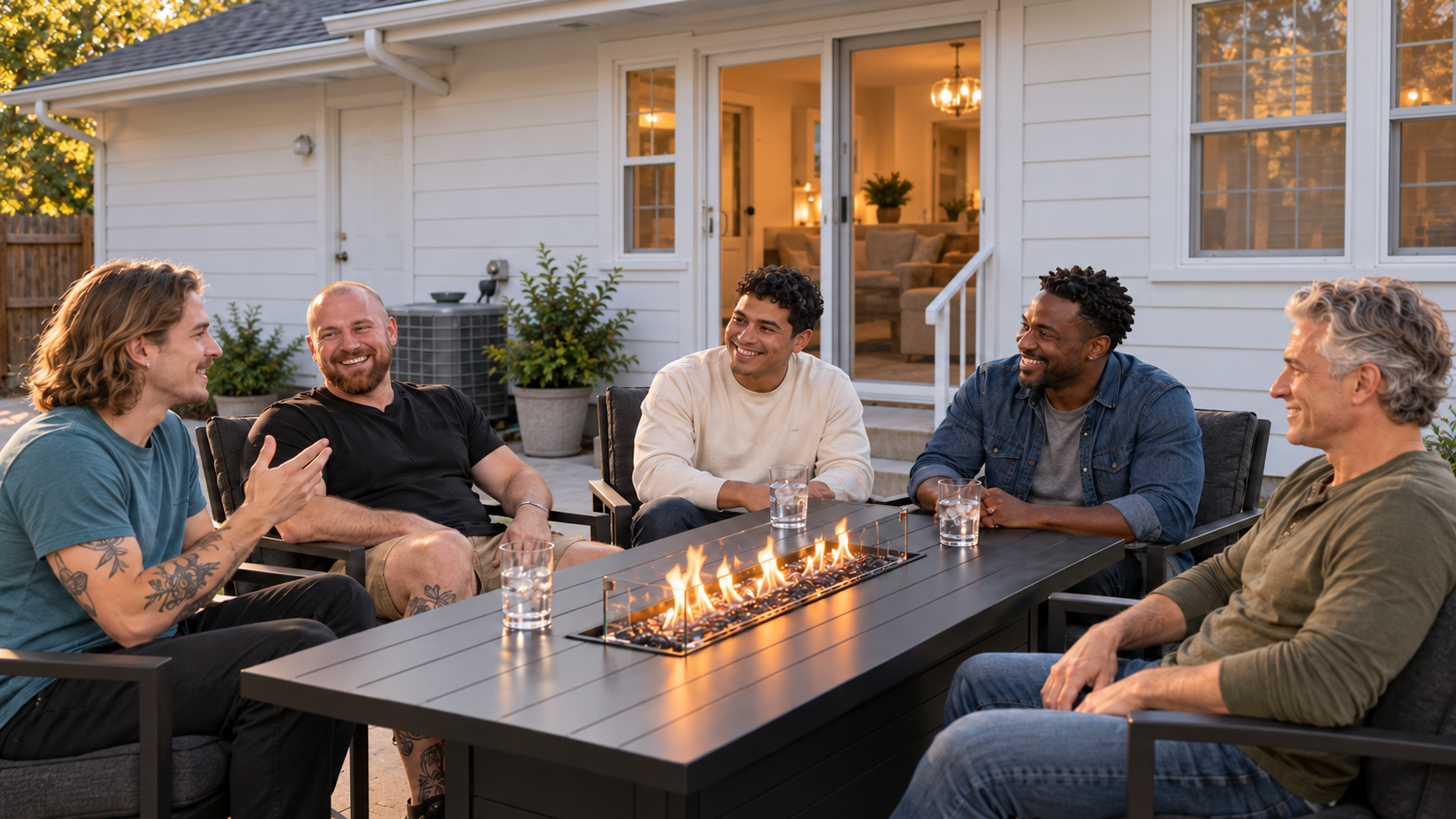
Sober living provides a substance-free living environment with recovery support. Services vary by residence — some offer minimal structure, others include coaching, programming, and community accountability. RCVRY HOUSE is a nonclinical program for adult men who receive treatment through outside providers. What it provides is something distinct from treatment — and equally important: a safe, accountable environment to practice living sober in the real world.
At RCVRY HOUSE, that means:
- A fully furnished home in a real Omaha neighborhood
- Certified Recovery Coaches who provide peer support and guidance
- A structured weekly schedule built around treatment, work, fitness, and community
- Random drug and alcohol testing
- House rules that create accountability without punishment
- Meals, transportation support, and access to a gym
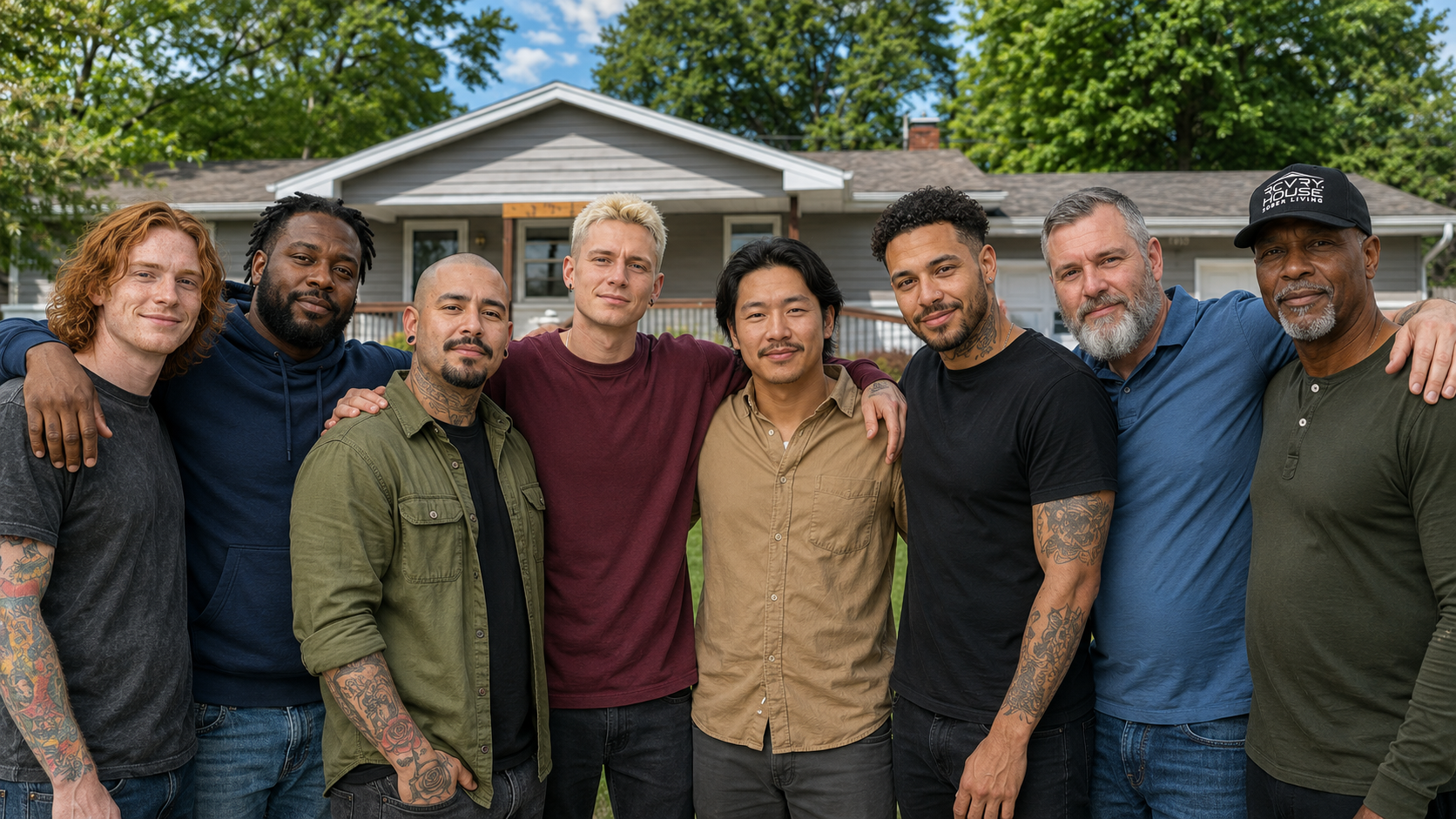
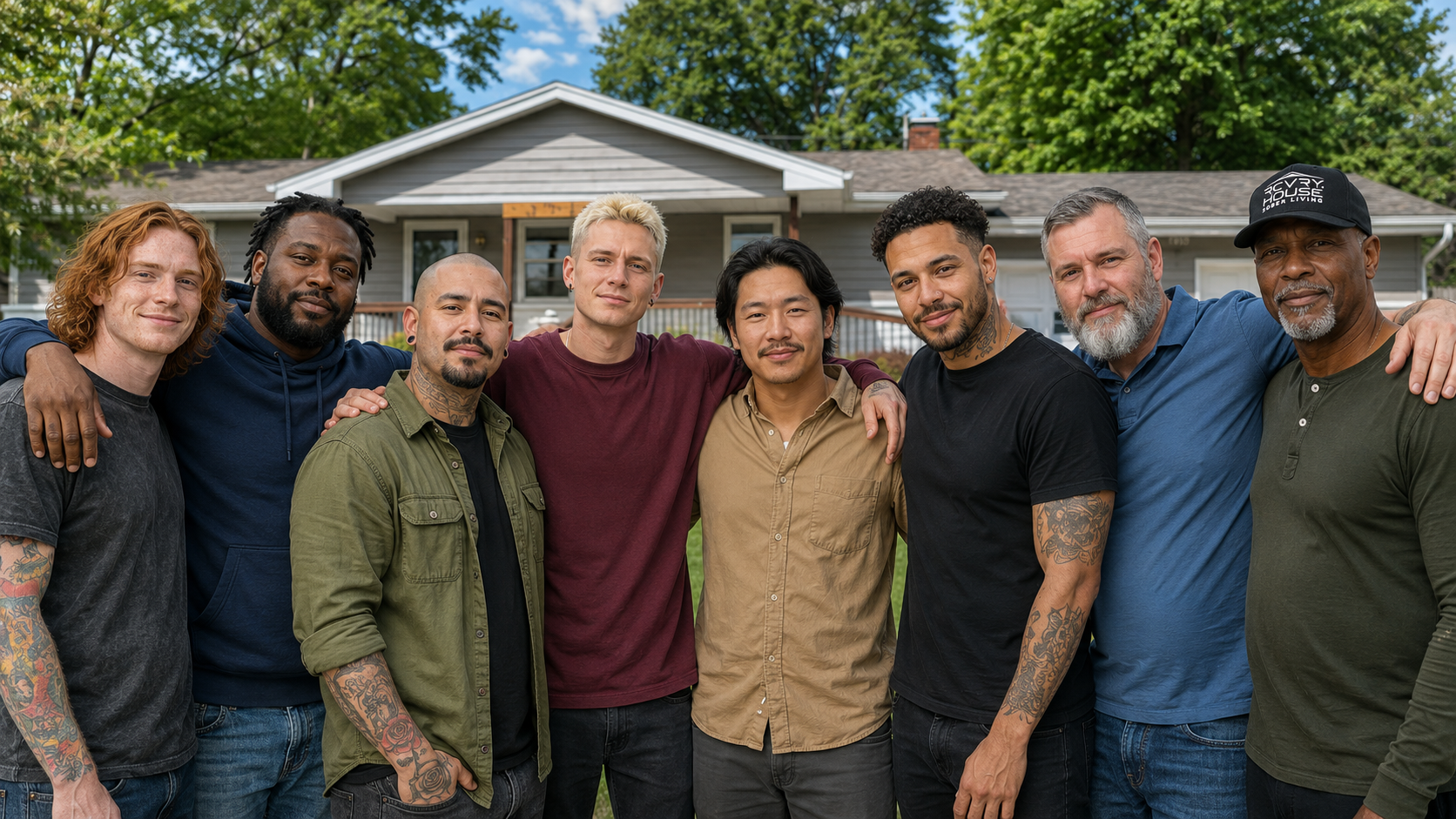
- A community of men who are doing the same hard work you are
Sober living bridges the gap between the controlled environment of treatment and the full independence of living on your own. It's where the skills you learned in rehab get tested — and where the habits that will carry you for the rest of your life get built.
The Critical Difference: Clinical vs. Peer-Based
The most important distinction between rehab and sober living comes down to this:
Rehab treats the addiction. Sober living supports the life.
In rehab, your days are structured for you. Meals are provided. You don't have to worry about rent, transportation, or what to do on a Tuesday night. That structure is intentional — it removes the noise of daily life so you can focus entirely on clinical work.
But that same structure can become a crutch. When treatment ends and a man walks out the door, the real world doesn't care that he just completed 30 days of residential treatment. Bills are due. Relationships need repair. Jobs need to be found. And the triggers that existed before treatment? They're still there.
Sober living doesn't remove those challenges. It walks alongside you as you face them — with accountability, coaching, and a community of men who understand exactly what you're going through.
Who Is Sober Living For?
Sober living is not for everyone at every stage of recovery. It's most effective — and most appropriate — for men who:
- Have completed or are actively enrolled in a PHP or IOP program
- Are medically stable and no longer require 24-hour clinical supervision
- Are motivated to work, contribute, and take responsibility for their recovery
- Need more structure and accountability than living alone or returning home would provide
At RCVRY HOUSE, every participant is required to be enrolled in an approved outpatient program (PHP or IOP) during their stay. That's not a formality — it's the foundation. Sober living and outpatient treatment work together. One without the other leaves a significant gap.
Why the Transition Period Matters So Much
Research consistently shows that the period immediately following residential treatment is the highest-risk window in early recovery. Relapse rates in the first 30–90 days after discharge are significant — not because treatment failed, but because the transition from a controlled environment to independent living is genuinely hard.
Think of it this way: you can learn to swim in a pool. But the first time you're in open water, with waves and current and no lane lines, is a completely different experience. Sober living is the open water — but with a lifeguard nearby.
The men who do best in long-term recovery are typically the ones who didn't rush the transition. They took the time to build a foundation — steady employment, a recovery community, healthy routines, and a track record of showing up for themselves — before stepping fully into independent living.
What Sober Living Is Not
Because there's so much confusion in this space, it's worth being direct about what sober living is not:
- Not a treatment center. RCVRY HOUSE does not provide clinical therapy, medical care, or licensed addiction counseling.
- Not a halfway house. The term "halfway house" often carries a court-ordered or correctional connotation. Sober living is voluntary, peer-based, and focused on forward momentum — not compliance.
- Not a hotel. Participants are expected to work, attend treatment, contribute to the household, and take their recovery seriously. This is a community, not a service.
- Not a guarantee. No sober living home — or any recovery program — can guarantee sobriety. What RCVRY HOUSE can offer is structure, support, and a community that makes recovery more possible.
How Rehab and Sober Living Work Together
The most effective path through early recovery typically looks something like this:
- Detox (if needed) — medical stabilization
- Residential Treatment — intensive clinical work
- PHP/IOP — step-down outpatient treatment
- Sober Living — structured housing while continuing PHP or IOP
- Independent Living — full autonomy, with an ongoing recovery community
Sober living isn't a replacement for treatment. It's the next chapter after treatment — the place where everything you worked for in rehab gets put into practice.
RCVRY HOUSE is designed to help men build routines, support networks, and practical skills they can carry into independent living.
Taking the Next Step
If you're finishing treatment and wondering what comes next, or if you're a family member trying to understand what your son or husband actually needs right now, the answer is rarely "go home and figure it out."
The transition from treatment to independent living is a critical window. Sober living exists to make that window survivable — and more than that, to make it the foundation of something lasting.
If you want to understand what life at RCVRY HOUSE actually looks like day to day, the What to Expect page walks through exactly that. And if you're ready to take the next step, we'd be glad to talk.
Apply for RCVRY HOUSE or schedule a confidential call — we're here when you're ready.
Explore Topics
Written by
Aaron Barnes
Founder of RCVRY HOUSE and certified recovery coach. Aaron writes from lived experience — on what it actually takes to build a life worth protecting.